Friday, April 5, 2013

Fun in the Mud!

Shrimp in the lab
It's the end of our first week at Hatfield and it's been a great one! We finished this week off strong with lectures all about worms and one more field trip to the mud flats in Yaquina Bay. The class was on the lookout for these exciting creatures, and we found some!
Another cool photo from Josh
After we donned our rain and mud gear, we set out for the mud flat and found it's a difficult place to get around. Within the first few feet, people were already getting stuck in the ankle deep mud that soon turned to knee deep mud.
The trek out through the mud
There were many strategies to break free from the mud, using shovels or a friend, but eventually many of us just gave up and started to crawl across the mud. Some adventurous classmates decided to slide through the mud on their backs and found it worked surprisingly well!
Getting dirty in the mud!
It wasn't all just playing games in the much. Not only did we find lots of interesting invertebrates, we also learned about how these organisms, like the burrowing shrimp affect the stability of the mud. It was a great first week at Hatfield and we're looking forward to more exciting adventures to come!
Thanks for the cool picture Ellen!

The New World of Invertebrates

The steep hike down to Boiler Bay
Collecting specimens at Strawberry Hill
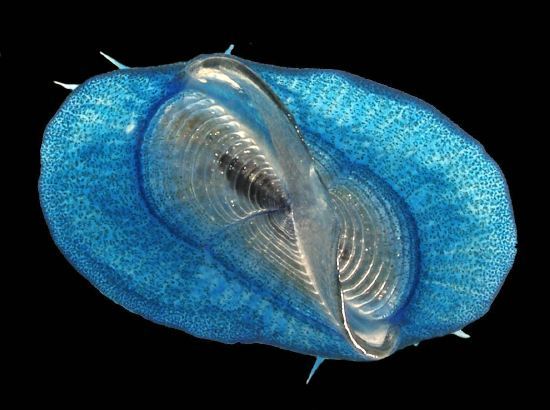
We started off Wednesday and Thursday with lectures about the unique characteristics of invertebrates common to the Oregon coast. And now time for a new adventure! Off to Boiler Bay and Strawberry Hill to collect some of the invertebrate about which we've been learning. Everyone was on the lookout for an invertebrate called the by-the-wind-sailor (Vellela vellela). This species can look like an alien to an everyday-passerby on the beach, but it's actually a free-floating colony of polyps. With a brilliant blue color and a sail that catches the wind, these organisms move around the ocean and sometimes get stranded on the sandy beaches. Only some of these creatures accidentally end up on our beaches.  It's all based on what direction their sail faces. Half of these ocean sailors have a sail turned to the right and the other half have a sail turned to the left. Thus, the same wind sends them in opposite directions. Unfortunately for us, we didn't bump into any of these on our travels (good for Vellela vellela).
(photo source)
We did find some other great ones though! Some of our favorites that we found were:
Giant Green Anemone (Anthopleura xanthogrammica)
(photo source)

 Blood Star (Henricia leviuscula )
Cool photo by Josh!

and the Opalescent Nudibranch (Hermissenda crassicornis)
(photo credit)

After we brought these organisms to their new home back in our lab, we spent some time identifying and drawing them. We're making lab notebooks about the critters we found with pictures and the interesting information about them. It's a lot of fun being able to see the organisms we're learning about in person. Another two great days at Hatfield!

A Home in Hatfield

The 2013 class
 Welcome to Hatfield! Our new home for the next 10 weeks. We were welcomed to Hatfield with beautiful sunny weather and blue skies. This lasted only a short while before Oregon showed its true colors in the form of hurricane rain and gale force winds. The people at Hatfield were much nicer than the weather and graciously showed us their facilities. After we moved in and had a tour, we jumped right into the natural history of the Oregon coast on Monday morning.


Like everything at Hatfield, we reinforced what we learned in the classroom by experiencing it. Field trip time!
   On Tuesday, the class hiked up the beautiful Cascade Head where we looked for unique landscape characteristics of the Oregon coast (and whales!), but instead we saw nothing but a giant cloud. 
Looking for whales!


  Thankfully, as our professor Dr. Sally Hacker promised, the weather cleared up and everyone enjoyed the breath taking views from atop Cascade Head. 

Tuesday, April 2, 2013

Welcome to Hatfield!

Welcome to Hatfield Marine Science Center for Marine Biology 2013! I hope everyone is excited to learn about the amazing world of marine inverts and see animals that you never knew existed! I know I'm looking forward to this week's tidepooling and mud-filled adventures...
 
Well... tardigrades aren't really marine species. So...


Have a great week!
Reuben and Sally