Week 8: The Final Countdown - Research Projects!
Monday 05/20
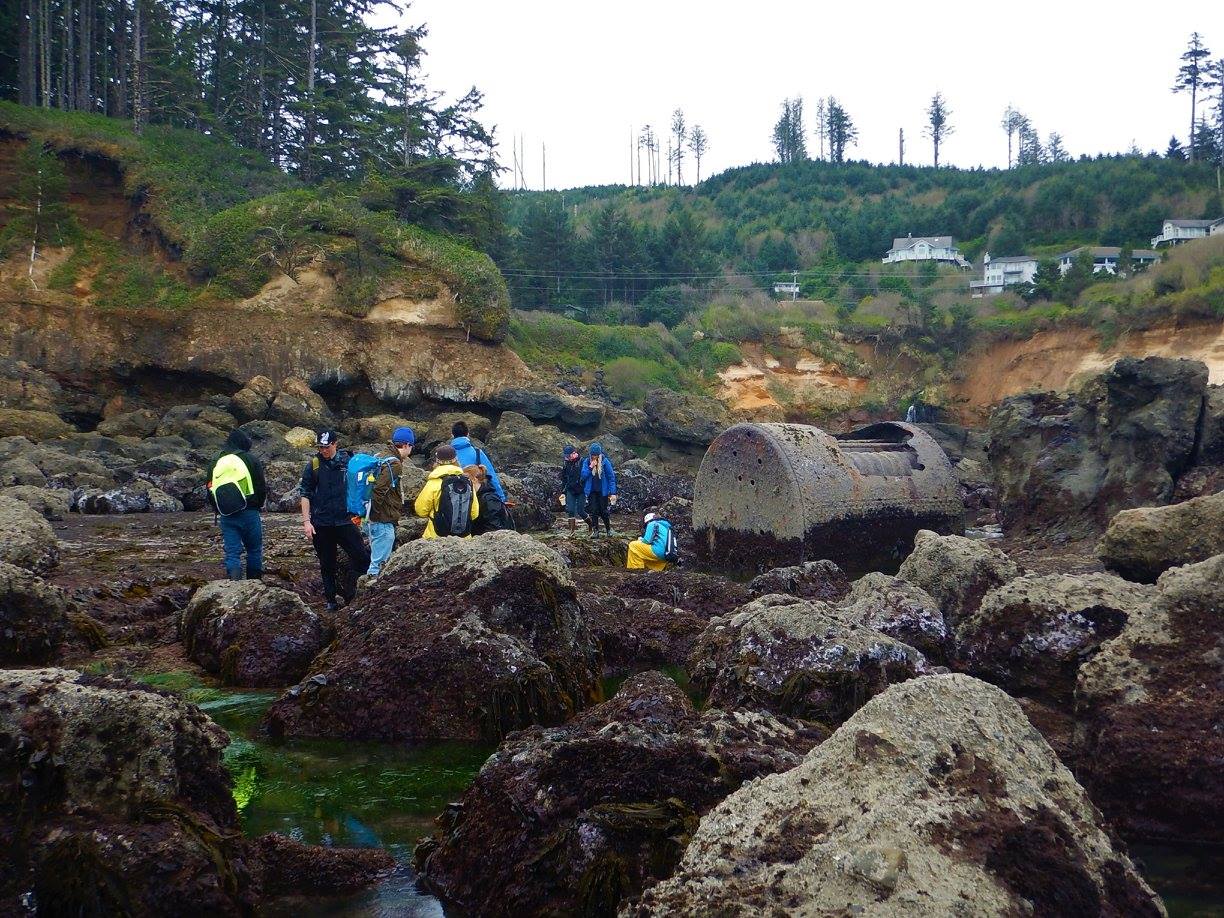
We are all feeling bright eyed and bushy tailed as we finally get to take all that we have learned
from this course and get going on our group projects. All nine of the groups got started on their
projects today, whether that meant going to the tide pools, mud flats, or setting up tanks in the lab.
Many groups are working with inverts for their projects which means the tanks are full of some pretty
crabby creatures. With teams testing different crab trap types, observing how Nucella feeds in the presence
of crabs, comparing which crabs live in which estuary habitats, and conducting crab competition
experiments there’s a lot of hope that we’ll get to feast on some crabs at the end of the week.
In addition to the crabs, we have tanks full of nudibranchs, anemones, pipefish, and mussels.
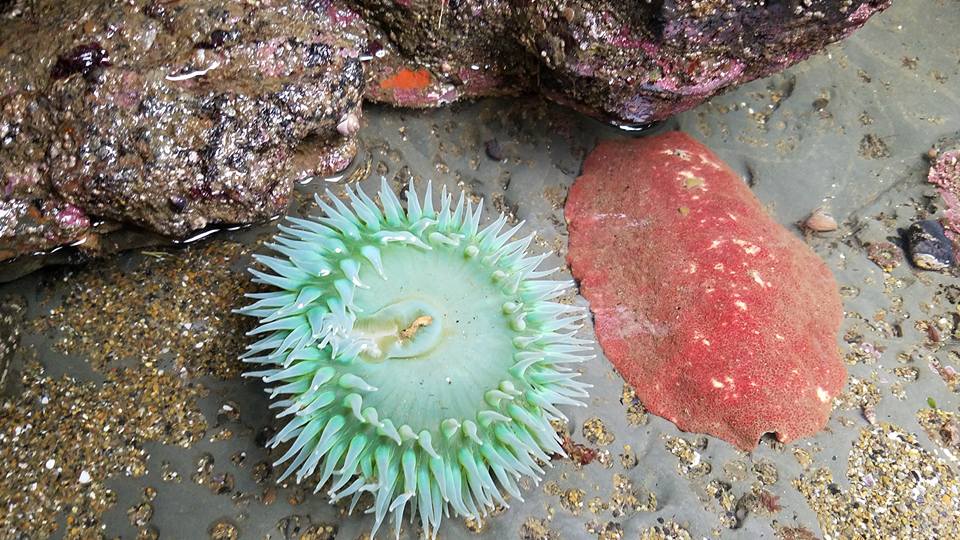
A feeding experiment is being conducted by Emily M., Charlotte, and Bri on the nudibranch
Hermissenda crassicornis and the anemone anthopleura elegantissima. Chelsey, Grace, and
Ashley have been working hard doing beach seines daily in order to collect enough pipefish to
observe their orientation in relation to eelgrass. An experiment on microplastics is being conducted
by Elise, Megan C., and Emily V. using Mytilus californianus and glitter. Renee, Alison, and Sarah K.
are using light bulbs, glow sticks, and no light to see what different organisms get drawn to their light traps.
from this course and get going on our group projects. All nine of the groups got started on their
projects today, whether that meant going to the tide pools, mud flats, or setting up tanks in the lab.
Many groups are working with inverts for their projects which means the tanks are full of some pretty
crabby creatures. With teams testing different crab trap types, observing how Nucella feeds in the presence
of crabs, comparing which crabs live in which estuary habitats, and conducting crab competition
experiments there’s a lot of hope that we’ll get to feast on some crabs at the end of the week.
In addition to the crabs, we have tanks full of nudibranchs, anemones, pipefish, and mussels.
A feeding experiment is being conducted by Emily M., Charlotte, and Bri on the nudibranch
Hermissenda crassicornis and the anemone anthopleura elegantissima. Chelsey, Grace, and
Ashley have been working hard doing beach seines daily in order to collect enough pipefish to
observe their orientation in relation to eelgrass. An experiment on microplastics is being conducted
by Elise, Megan C., and Emily V. using Mytilus californianus and glitter. Renee, Alison, and Sarah K.
are using light bulbs, glow sticks, and no light to see what different organisms get drawn to their light traps.

A group dissecting mussels to study microplastics.
Tuesday 05/21
Students are putting in long hours at the lab making observations both in the tanks and through their
microscopes. Stephania, Laura, and Sarah H. have spent hours every day this week observing different
diatoms they have collected under their microscopes. It may only be day two of projects week but everyone
has put in so many hours of hard work that you can already see just how tired everyone is. Even though
everyone is tired you can still see the excitement on everyone's faces when you ask them how their
projects going and they get to tell you things are going well! During collection among the tide pools
for nudibranchs by Emily M., Charlotte, and Bri’s group, a very interesting nudibranch was found,
not yet seen or collected by our class. “It looks like a Pokemon”, said Charlotte. And indeed, this
cartoon-like gastropod was identified as Dirona albolineata. This species of nudibranch is mostly
translucent, and the color of its large cerata may vary from a white to a pinkish hue. D. albolineata
can even reach sizes up to 18 cm in length!
microscopes. Stephania, Laura, and Sarah H. have spent hours every day this week observing different
diatoms they have collected under their microscopes. It may only be day two of projects week but everyone
has put in so many hours of hard work that you can already see just how tired everyone is. Even though
everyone is tired you can still see the excitement on everyone's faces when you ask them how their
projects going and they get to tell you things are going well! During collection among the tide pools
for nudibranchs by Emily M., Charlotte, and Bri’s group, a very interesting nudibranch was found,
not yet seen or collected by our class. “It looks like a Pokemon”, said Charlotte. And indeed, this
cartoon-like gastropod was identified as Dirona albolineata. This species of nudibranch is mostly
translucent, and the color of its large cerata may vary from a white to a pinkish hue. D. albolineata
can even reach sizes up to 18 cm in length!


A group observing their collected diatoms under their microscopes!
D. alboineata, a nudibranch not previously collected by our class.
D. alboineata, a nudibranch not previously collected by our class.
Wednesday 05/22
Another day of collecting data for projects! Every group is well on their way and chugging along as
we meet the halfway mark for working on projects. Chelsey, Grace, and Ashley’s group, which have
been monitoring their pipefish to observe their orientation in relation to eelgrass, have collected lots
of pipefish and have been spending many hours observing them in the lab. Some groups that are
sampling in the field are still heading out at their various intertidal locations of interest (some at
multiple times of the day). Allison, Renne, and Sarah’s group are examining phytoplankton, and
are often seen in the lab viewing their samples from the field in the laboratory. Many groups have
had meetings today with various instructors and TA’s to discuss how their projects are progressing
and to figure out what statistical tests may be best to run on their experiments. Additionally, people
are starting to think about the end of the term presentations and paper. Sources are being gathered,
and lots of ideas are getting bounced around!
we meet the halfway mark for working on projects. Chelsey, Grace, and Ashley’s group, which have
been monitoring their pipefish to observe their orientation in relation to eelgrass, have collected lots
of pipefish and have been spending many hours observing them in the lab. Some groups that are
sampling in the field are still heading out at their various intertidal locations of interest (some at
multiple times of the day). Allison, Renne, and Sarah’s group are examining phytoplankton, and
are often seen in the lab viewing their samples from the field in the laboratory. Many groups have
had meetings today with various instructors and TA’s to discuss how their projects are progressing
and to figure out what statistical tests may be best to run on their experiments. Additionally, people
are starting to think about the end of the term presentations and paper. Sources are being gathered,
and lots of ideas are getting bounced around!


A pipefish monitoring experiment underway.
A group getting ready to head out for project collections!
Even when it rains, there’s often a beautiful sunset at Hatfield that is arguably best viewed from the
estuary trail (just a minute’s walk from Hatfield itself). Whether you are a tired current student, a
future student thinking about taking the BI450 course, or are someone just visiting Newport,
don’t miss this trail on a beautiful evening.
estuary trail (just a minute’s walk from Hatfield itself). Whether you are a tired current student, a
future student thinking about taking the BI450 course, or are someone just visiting Newport,
don’t miss this trail on a beautiful evening.

Thursday 05/23
All downhill from here! Many of our groups are starting to see some patterns from their hard work
on the projects! Students are getting very excited as their ideas for their hypothesis are really
starting to mold. It was very common to come in at night and see some groups still working hard
on their data. One group was even counting crabs well past 10:00 pm on some nights! Charlie, Cori,
and Eric Cole are looking at crab counts in different parts of the Yaquina Bay. “We head out twice a
day around low tide to identify and measure the crabs in our 24 pitfall traps in the mudflats,” said Eric.
“It is somewhat tiring, especially at night, but then you stumble upon a big boy in the trap and everyone
gets excited.”
on the projects! Students are getting very excited as their ideas for their hypothesis are really
starting to mold. It was very common to come in at night and see some groups still working hard
on their data. One group was even counting crabs well past 10:00 pm on some nights! Charlie, Cori,
and Eric Cole are looking at crab counts in different parts of the Yaquina Bay. “We head out twice a
day around low tide to identify and measure the crabs in our 24 pitfall traps in the mudflats,” said Eric.
“It is somewhat tiring, especially at night, but then you stumble upon a big boy in the trap and everyone
gets excited.”
To conclude the week, we will be returning back to the classroom to spend the next week and tomorrow
discussing conservation and policy for our oceans. We will have a presentation and a little project the next
week to help us understand just the kind of process it is for conservation actions to be put into place.
discussing conservation and policy for our oceans. We will have a presentation and a little project the next
week to help us understand just the kind of process it is for conservation actions to be put into place.

Not even the sun can stop Charlie D. from collecting Hemigrapsus oregonensis from his pitfall traps
Friday 05/24
It’s halftime on the projects folks. Due to the tides this year we are putting our projects on pause for
a week. So for the next week and today, we will be reviewing articles and discussing different aspects
of conservation and policy. Today we talked about the state of our oceans in relation to the changing
climate. A large piece of today’s lecture was about the increase in carbon dioxide in our atmosphere.
Dr. Henkel discussed how our planet has reached over 410 parts per million of CO2 in all of April!
After a lengthy discussion on what is being done to address certain issues about the changing
climate and marine pollution, we shifted focus on marine reserves versus marine protected areas.
We learned that some marine species benefit from reserves while other species populations do better
in a protected area. We ended the long day with a talk about how Oregon chose its marine reserves
along the Pacific Coast and the lengthy, layered process that it takes to make these decisions.
a week. So for the next week and today, we will be reviewing articles and discussing different aspects
of conservation and policy. Today we talked about the state of our oceans in relation to the changing
climate. A large piece of today’s lecture was about the increase in carbon dioxide in our atmosphere.
Dr. Henkel discussed how our planet has reached over 410 parts per million of CO2 in all of April!
After a lengthy discussion on what is being done to address certain issues about the changing
climate and marine pollution, we shifted focus on marine reserves versus marine protected areas.
We learned that some marine species benefit from reserves while other species populations do better
in a protected area. We ended the long day with a talk about how Oregon chose its marine reserves
along the Pacific Coast and the lengthy, layered process that it takes to make these decisions.
This week has been long and fun for many of us. We are excited to have Dr. Henkel back as she steers
our class vessel into Week 9! We are looking forward to our three day weekend and honoring those who
gave the greatest sacrifice of all for our safety and freedom. To our Veterans, we say thank you and
never forget.
our class vessel into Week 9! We are looking forward to our three day weekend and honoring those who
gave the greatest sacrifice of all for our safety and freedom. To our Veterans, we say thank you and
never forget.

Eric Cole with a Carcinus maenas posing for its close up